AI Will Not Replace Great Educators — But It Will Change What Great Schools Do Next
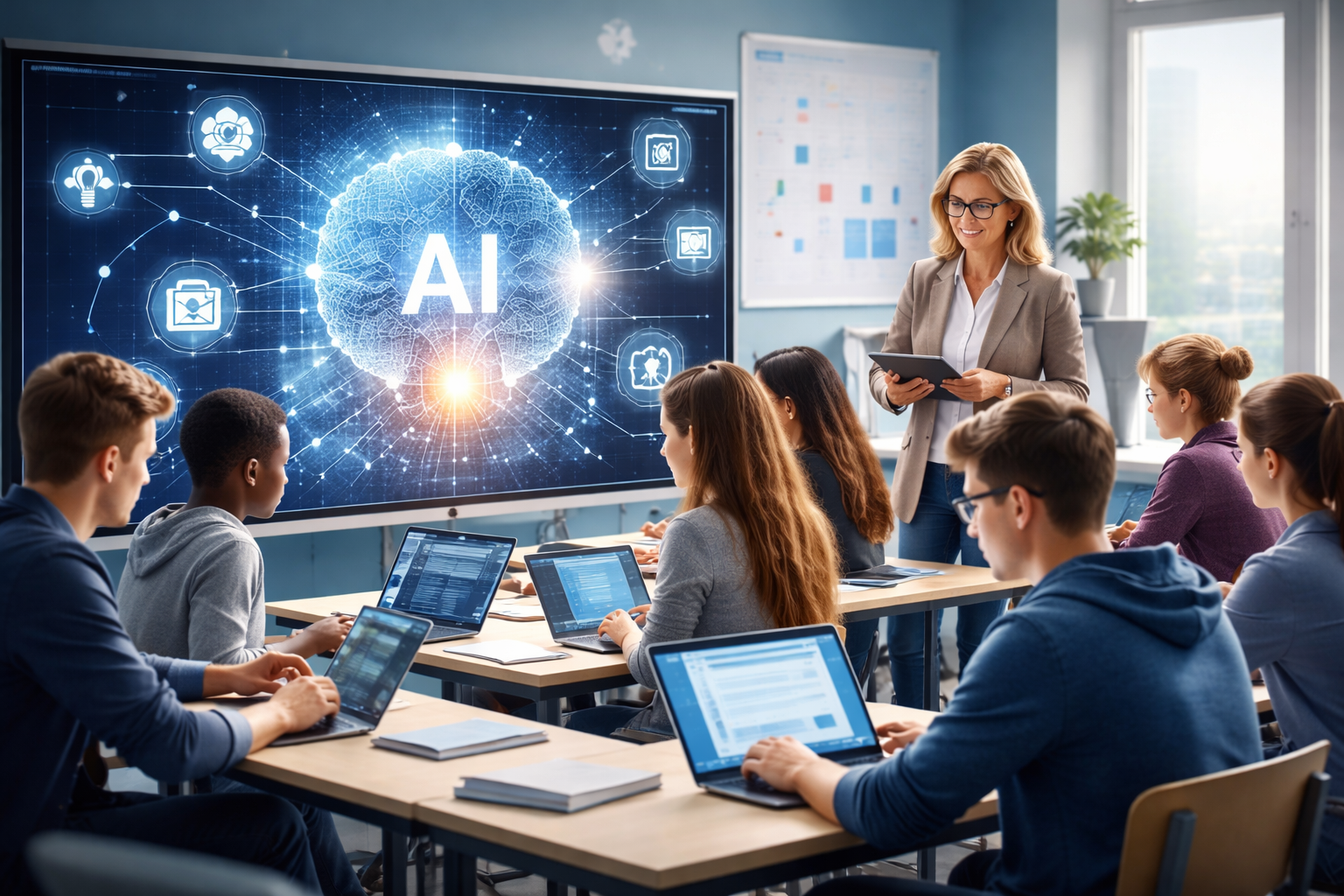
Artificial intelligence is rapidly reshaping nearly every industry in the world. Higher education, K–12 schools, and mission-driven institutions are now facing a question that leaders cannot avoid:
How do we prepare students for a world where AI is part of nearly every profession?
There is understandable anxiety surrounding artificial intelligence. Teachers worry about academic integrity. Parents wonder whether technology will replace human learning. Administrators are trying to determine what policies should exist before the technology outruns our ability to manage it.
But the conversation about AI in education is often framed incorrectly.
The question is not whether AI belongs in education.
The real question is whether schools will lead the AI era or simply react to it.
AI Is Already in the Classroom
Whether we acknowledge it or not, students are already using AI tools every day.
They use AI to:
brainstorm ideas
summarize readings
analyze complex topics
explore career paths
Ignoring AI will not stop this shift. Instead, schools must help students learn how to use these tools responsibly and intelligently.
Just as calculators once changed mathematics instruction, AI will change how students research, write, and solve problems.
The responsibility of schools is not to ban innovation but to teach discernment, ethics, and critical thinking.
The Real Competitive Advantage for Schools
In an AI-enabled world, the competitive advantage of schools will not be technology itself.
Technology will become universal.
The true differentiators will be:
• critical thinking
• ethical leadership
• creativity
• collaboration
• character formation
These are areas where great educators will always matter more than algorithms.
AI may assist students in gathering information, but it cannot replace mentorship, community, and values-based leadership.
Mission-Driven Education Matters Even More in the AI Era
For faith-based and mission-driven schools, the AI conversation should also include human dignity and ethical responsibility.
Technology is powerful. But without moral grounding, technology can also be misused.
Education must continue to form students who ask:
Should we do this?
Who does it serve?
What impact does it have on people and communities?
These questions are as important as any technological skill.
Preparing Students for the Future
The schools that will thrive in the next decade will do three things well:
Teach students how to use AI tools responsibly
Strengthen human skills that technology cannot replace
Integrate ethics and leadership into technological education
When done well, AI does not diminish education.
It elevates the importance of great teachers, strong institutions, and mission-driven leadership.
A Leadership Moment for Education
Every generation of educators faces a defining challenge.
For today’s leaders, that challenge is navigating the AI revolution wisely.
Schools that approach AI with fear will struggle.
Schools that approach it with wisdom, values, and innovation will prepare students not just to survive the future — but to lead it.
Dr. Brian David Wickstrom writes frequently about leadership, higher education, and the future of mission-driven schools.
